
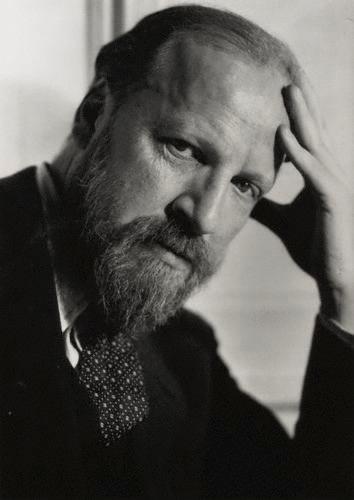
William Golding
Published Editions & Books
7 titles


William Golding's Literary & Academic Works in Nepal
Official Verified Author Bibliography
Welcome to the official verified profile for William Golding on Scolar Nepal.
The winner of the 1983 Nobel Prize in Literature, William Golding is among the most popular and influential British authors to have emerged in the second half of the twentieth century. Golding's reputation rests primarily upon his first novel, Lord of the Flies (1954), which is consistently regarded as an effective and disturbing portrayal of the fragility of civilization.
**Childhood and college years** Golding was born in Saint Columb Minor in Cornwall, England, in 1911. His father, Alex, was a schoolmaster, while his mother, Mildred, was active in the Women's Suffrage Movement (the movement for women's right to vote). As a boy, his favorite authors included H. G. Wells (1866–1946), Jules Verne (1828–1905), and Edgar Rice Burroughs (1875–1950). Since the age of seven, Golding had been writing stories, and at the age of twelve he attempted to write a novel.
Golding remained an enthusiastic writer and, upon entering Brasenose College of Oxford University, abandoned his plans to study science, preferring to read English literature. At twenty-two, a year before taking his degree in English, Golding saw his first literary work published—a poetry collection simply titled Poems.
After graduating from Oxford in 1935, Golding continued the family tradition by becoming a schoolmaster in Salisbury, Wiltshire. His teaching career was interrupted in 1940, however, with the outbreak of World War II (1939–45). Lieutenant Golding served five years in the British Royal Navy and saw active duty in the North Atlantic, commanding a rocket launching craft.
**Lord of the Flies** Golding had enhanced his knowledge of Greek history and mythology by reading while at sea, and when he returned to his post at Bishop Wordsworth's School in 1945, he began furthering his writing career. He wrote three novels, all of which went unpublished. But his frustration would not last long, when, in 1954, Golding created The Lord of the Flies. The novel was rejected by twenty-one publishers before Faber & Faber accepted the forty-three-year-old schoolmaster's book.
Initially, the tale of a group of schoolboys stranded on an island during their escape from war received mixed reviews and sold only modestly in its hardcover edition. But when the paperback edition was published in 1959, thus making the book more accessible to students, the novel began to sell briskly. Teachers, aware of the student interest and impressed by the strong theme and symbolism of the work, began assigning Lord of the Flies to their literature classes. As the novel's reputation grew, critics reacted by drawing scholarly reviews out of what was previously dismissed as just another adventure story.
The author's extremely productive output—five novels in ten years—and the high quality of his work established him as one of the late twentieth-century's most distinguished writers. This view of Golding was cemented in 1965, when the author was named a Commander of the British Empire.
**Later works** After the success of Lord of the Flies, Golding enjoyed success with other novels, including Pincher Martin (1957), Free Fall (1959), and The Pyramid (1967). The author's creative output then dropped drastically. He produced no novels and only a handful of novellas (short novels), short stories, and other occasional pieces.
In 1979 Golding returned with the publi cation of Darkness Visible which received mixed reviews. The author faced his harshest criticism to date with the publication of his 1984 novel The Paper Men, a drama about an aging, suc cessful novelist's conflicts with his pushy, over-bearing biographer. Departing briefly from fic tion, Golding wrote a book containing essays, reviews, and lectures. A Moving Target appeared in 1982, one year prior to the author's receipt of the Nobel Prize in Literature.
William Golding died in England in 1993. A year after his death, The Double Tongue was released, published from a manu script Golding completed before he died.
[Source][1]
[1]: http://www.notablebiographies.com/Gi-He/Golding-William.html
We are deeply committed to ensuring that William Golding's intellectual contributions, literary bestsellers, and academic reference materials are preserved and accessible to readers, educators, and scholars across Nepal. Browsing our collection guarantees you are viewing a verified bibliography with authentic details.
Direct Publisher Partnerships & Genuine Prints
Purchasing original books directly supports authors and ensures you receive high-quality typography, clear diagrams, and durable physical construction. Scolar collaborates directly with official publishers and authorized national distributors in Nepal. When you order any of the 7 published editions listed above, you can rest assured that you are acquiring a 100% genuine print that respects the copyright and vision of William Golding.
Nationwide Distribution & Fast Delivery
Whether you reside in Kathmandu Valley, Pokhara, Chitwan, or remote rural provinces, Scolar makes acquiring William Golding's works seamless. We provide doorstep delivery across all 77 districts in Nepal, featuring Cash on Delivery (COD) options, free shipping on orders over Rs. 1,500, and a hassle-free 7-day return policy.
Frequently asked questions
Where can I buy books by William Golding in Nepal?
You can securely buy all published books, academic reference materials, and original editions by William Golding online directly at Scolar Nepal. We offer fast home delivery across all 77 districts with Cash on Delivery (COD).
Are the books by William Golding on Scolar original and authentic?
Absolutely. Scolar strictly sources books exclusively from authorized publishers and verified distributors in Nepal. We guarantee that every single book authored by William Golding is a 100% genuine edition.
Do you deliver William Golding's books outside the Kathmandu Valley?
Yes, our logistics network covers all 77 districts of Nepal. If your total order value exceeds Rs. 1,500, you qualify for free nationwide home delivery.